



First in the Baltics: Vilnius and Kaunas Airports Ease Liquid Rules with Next-Generation Security Scanners
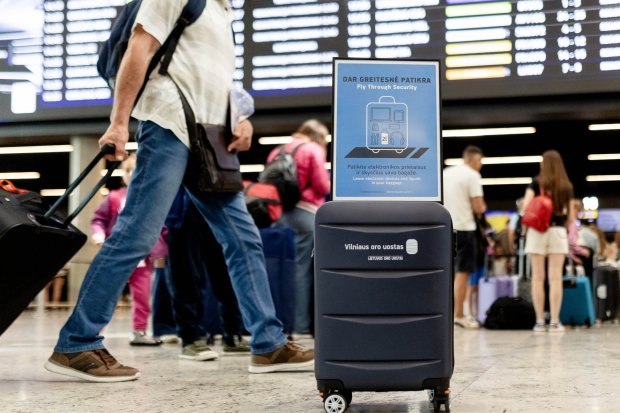
Travel at Vilnius and Kaunas airports is becoming even simpler and faster: for some time now, passengers have not been required to remove electronic devices from their hand luggage during aviation security checks, and starting from 22 August, they will no longer need to remove liquids either.
This improvement, which makes travel even more convenient, has been made possible by the innovative and advanced technological solutions of Lithuanian Airports (LTOU), investments in the latest generation of security scanners now in operation, as well as the European Commission’s (EC) decision adopted at the end of July, which opened the way for easing liquid-carrying rules.
According to LTOU representatives, Vilnius and Kaunas airports are the first in the Baltic region to implement this new liquid-carrying procedure.
Liquids allowed in containers up to 2 liters
Under the EC’s decision, passengers may now carry liquids in hand luggage in containers up to 2 liters in volume. The type or shape of the container is not important. However, passengers should remember that airlines set their own restrictions on the overall weight and size of hand luggage, so they must take those limits into account.
“The impact of this decision on the passenger experience at airports will be significant. Simply put, when a person comes to the security checkpoint – they will not need to remove anything from their baggage. This saves time and reduces stress. Every passenger will be able to experience the benefits of modern technology for more comfortable and faster travel. At Vilnius and Kaunas airports, the security screening procedures use next-generation computed tomography scanners, which we were the first in the Baltics to implement. The German-made Smiths Detection screening equipment fully complies with high security standards and allows electronics, liquids, and all other items inside suitcases, bags, or backpacks to be analyzed in 3D space without removing them,” said Vidas Kšanas, Head of the Safety and Security Department at Lithuanian Airports (LTOU).
According to Kšanas, investments made by LTOU in 2022–2023 in advanced technologies ensured full readiness for these changes, enabling the immediate introduction of more comfort and speed for passengers. He emphasized that the EC’s latest decision creates opportunities to further accelerate the hand luggage screening process at Vilnius and Kaunas airports and to serve more passengers within the same timeframe – a particularly important factor for airports in the long term, as the number of travelers in Lithuania continues to grow rapidly.
Previous rules still apply when traveling through other airports
It should be noted that until now, liquids carried in hand luggage had to be placed in containers of no more than 100 ml, stored in a separate 1-liter bag, and removed from the bag during security screening. This procedure will remain in place at other European airports – most often smaller ones – including Palanga Airport, where the latest scanners capable of screening liquids without removal have not yet been installed.
LTOU Safety and Security Department Head Kšanas also acknowledged that many larger European airports had been waiting for the EC’s decision to ease restrictions on liquids, as this technological innovation shortens screening times while maintaining the highest security standards.
The LTOU representative notes that the deployment of third-generation (C3) 3D computed tomography scanners is a rapidly expanding aviation security practice across Europe. However, not all airports in Europe have such state-of-the-art equipment, so passengers are advised to check whether the same (eased) liquid rules will apply, for example, when departing from another airport on their return trip to Lithuania.