



Natal Airport breaks traffic record and is the fastest growing in the Northeast
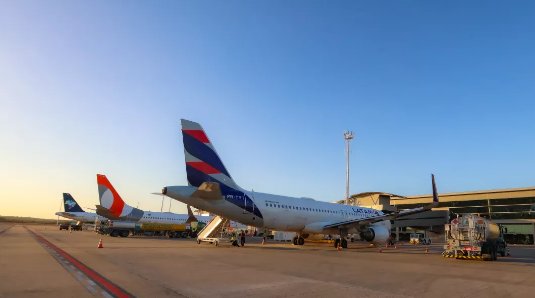 Credit: Alex Regis
Natal International Airport, located in São Gonçalo do Amarante, recorded the second-highest growth in passenger traffic among Brazilian airports in the first four months of 2026. The increase was 18%, the highest in the Northeast region. In total, 964,000 passengers passed through the terminal, operated by Zurich Airport Brasil, considering both arrivals and departures. Looking at the monthly figures, April stood out with 217,000 passengers and a growth of 28%, the highest in the country during that period.
The data was presented by the concessionaire at a meeting with representatives of the Government of Rio Grande do Norte this Thursday (11). According to Zurich Airport Brasil, the performance in the four-month period was second only to Porto Alegre Airport, which grew by 22%. Completing the top 5 are the airports of Galeão, Vitória and Florianópolis, the latter two also operated by Zurich Airport Brasil.
“The increase in passenger flow is a very significant growth, above the national average, reinforcing the importance and competitiveness of the destination for Brazilian tourism. The growth is due to a series of factors, but mainly to tourism promotion, the assertive fiscal policy for aviation kerosene, and integrated work between the public sector, the tourism industry, and the private sector,” points out Ricardo Gesse, CEO of Zurich Airport Brazil.
The governor of Rio Grande do Norte, Fátima Bezerra, celebrates the increase in tourists in the state in 2026 and emphasizes that tourism is one of the main sectors generating employment and income in the state.
“These numbers reflect the teamwork developed by our Government, through Emprotur, Setur, the Tax Department, and the partnership with the Airport in promoting our destination. It also shows the robust growth of tourism in Rio Grande do Norte, which translates into development, since tourism is the largest job-generating sector in our state, and our commitment is to improving the quality of life of our population ,” points out Governor Fátima Bezerra.
According to Raoni Fernandes, president of the Potiguar Tourism Promotion Company (Emprotur), the result is the fruit of assertive work promoting the destination, based on analysis and strategic partnerships. “No previous government has achieved as many regular international routes as this government of Professor Fátima Bezerra. There were 5 weekly flights before Fátima, and now there are 17. Our work in promotion and market relations has consolidated Rio Grande do Norte as an international tourist destination, with growth evident in records, increased visibility, and a greater number of visitors. These tourists take photos, handicrafts, memories, but most importantly, they leave behind jobs and income for our people ,” he emphasized.
The first four months of the year saw record numbers in February, March, and April, with the highest passenger traffic for these months since the airport's inauguration in May 2014. In February, the terminal handled 234,000 passengers; in March, 228,000; and in April, 217,000. These figures include both domestic and international flights.
In international traffic, the growth was even more significant. The airport handled almost 80,000 international passengers in the first four months of the year, a 107% increase compared to the first four months of 2025. The number of international flights increased by 87%, totaling 575 operations.
The expansion of the international air network was driven, among other factors, by the arrival of JetSMART, which began operations on December 30th with flights between Natal and Buenos Aires. Currently, the airport also has direct connections to Montevideo and Lisbon, operated by GOL and TAP Air Portugal, respectively.
Since February 2024, Zurich Airport Brasil has invested approximately R$ 59 million in the terminal's infrastructure. Improvements include modernization of the air conditioning system, provision of free high-speed Wi-Fi, implementation of a multi-sensory room, a pet area, new signage, and expansion of VIP lounges. In the area of sustainability, the implementation of a solar power plant with 11,000 panels stands out, an initiative that will make the airport largely self-sufficient in energy.