



Gia Binh Airport CEO: shaping Vietnam’s next chapter in global connectivity
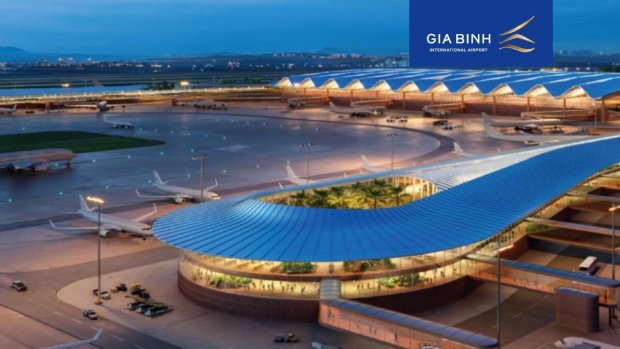 Credit: Masterise Aviation Infrastructure
At Routes World 2026, Vu Hoang Long, CEO of Masterise Aviation Infrastructure, set out why Gia Binh is being built as an aviation economic hub, not just an airport.
Speaking to FlightGlobal at Routes World 2026 in Frankfurt, Vu Hoang Long, CEO of Masterise Aviation Infrastructure JSC (MAI), described Gia Binh International Airport (GBIA) as an “Aviation Economic Hub 2.0” that connects aviation with logistics, trade, technology and services.
Key points from the interview
- Scale: designed to ICAO Code 4F, GBIA is planned for 30 million passengers and 1.6 million tonnes of cargo a year by 2030, rising to 50 million passengers and 2.5 million tonnes by 2050.
- Demand: around 892,000 passengers travelling to or from Hanoi in 2025 connected through hubs such as Doha, Istanbul, Guangzhou and Dubai – a market for new direct services.
- Reach: 297 airports and around 1.3 billion people within a three-hour flight.
- Progress: by the end of August 2026 the air traffic control tower had reached its full design height of 127 metres. The first phase focuses on airside infrastructure, the VIP terminal, the control tower and navigation systems for APEC 2027.
- Ambition: a long-term Skytrax five-star rating, delivered on ESG principles.
Mr Long said progress should be judged by concrete milestones rather than aspirations, and presented GBIA to airlines as a commercially attractive platform built on multimodal connectivity, operational reliability and the long-term growth of Northern Vietnam, from the Bac Ninh, Thai Nguyen and Hai Phong industrial clusters to the Hanoi – Ha Long – Ninh Binh tourism corridor.
Read the full interview on FlightGlobal.