



Three New Airlines Boost Malaysia’s Connectivity Across Two Continents
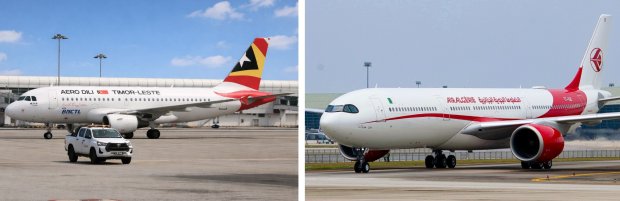
KL International Airport (KUL) recently welcomed two new airlines, AeroDili (8G) and Air Algerie (AH) that will further expand Malaysia’s connectivity across Asia and Africa, with operations commencing on 28 and 30 March respectively. Meanwhile, Penang International Airport (PEN) marks the entry of Qingdao Airlines (QW) from China on 31 March.
These additions support Malaysia Airports’ long-term ambition of positioning Malaysia as the most connected country in Asia Pacific, while unlocking new growth markets.
AeroDili operates twice-weekly direct flights between Kuala Lumpur and Timor-Leste, following Malaysia Airports’ proactive engagement with the airline and authorities after the Prime Minister’s official visit in September 2025. This included facilitating its Foreign Air Operator Certificate (FAOC) approval with the Civil Aviation Authority of Malaysia (CAAM), demonstrating the effective translation of bilateral ties into tangible aviation outcomes.
Air Algerie’s entry into KUL is a strategic milestone, creating the first direct link to Algeria. Operating thrice-weekly, the route opens a new North African corridor with no direct competition, complementing existing African connectivity via Ethiopian Airlines and Air Mauritius. Strong demand is evident, with its inaugural flight fully booked, signalling solid commercial potential and early traction in an underserved market. The route was secured through Malaysia Airports’ partnership with the airline via Routes, a global aviation forum where airports and airlines meet to develop new air services.
At PEN, Qingdao Airlines’ new service flies from Qingdao thrice weekly. It is the ninth Chinese carrier operating in PEN that expands access to secondary Chinese cities.
Dato’ Mohd Izani Ghani, Managing Director of Malaysia Airports said, “These additions are part of our ongoing efforts to strengthen Malaysia’s aviation ecosystem. They enhance connectivity and service quality while creating long-term value for passengers, airline partners and the wider economy. Our focus is on building a resilient, demand-driven network that supports tourism, trade and regional mobility, and we are actively pursuing new airline partnerships and routes to expand Malaysia’s global reach.”
For passengers, this translates into greater travel choice and more seamless connections across regions. At a network level, it widens Malaysia’s role in linking Asia with emerging markets, including Africa, while supporting connectivity across key growth corridors and contributing to Visit Malaysia 2026 objectives.