


Viracopos Connects Brazil to the World Through Expanded Air Cargo Network, New Routes, and Stronger Trade Links
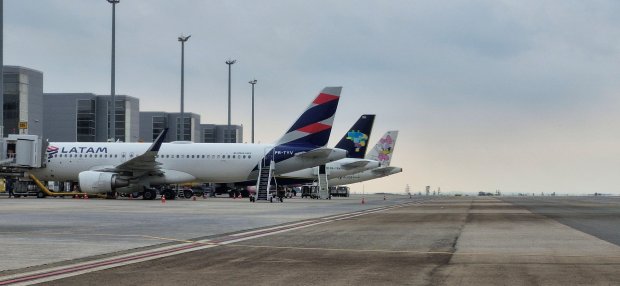
This extensive connectivity provides greater capacity availability, route diversification, operational reliability, and reduced transit times for importers and exporters alike.
Connectivity is one of Viracopos International Airport’s key competitive advantages. With the largest cargo flight network in Brazil, Viracopos has strengthened its position as the country’s leading logistics hub, connecting Brazilian companies to major global centers of production, technology, and consumption.
Today, Viracopos’ international cargo network includes scheduled services to strategic destinations across North America, Europe, Asia, and Latin America, bringing together some of the world’s leading cargo airlines and express logistics operators. This extensive connectivity provides greater capacity availability, route diversification, operational reliability, and reduced transit times for importers and exporters alike.
In 2026, Viracopos recorded significant developments across its international network. Among the highlights was the launch of CMA CGM Air Cargo’s direct service between Paris Charles de Gaulle Airport (CDG) and Viracopos, creating additional logistics options for the European market. Another important milestone was Tampa Cargo’s increase in flight frequencies, further strengthening the connection between Miami International Airport (MIA) and Viracopos, one of the most strategic logistics corridors for Brazilian foreign trade.
In Asia, Awesome Cargo expanded its presence through a series of scheduled operations during the first half of the year, connecting Hangzhou Xiaoshan International Airport (HGH) to Viracopos and enhancing access to one of the world’s largest industrial and technology hubs. Operations on this route are expected to resume during the second half of the year.
This high level of connectivity has been instrumental in supporting the growth of key industries that rely on Viracopos as a gateway to Brazil. These include the technology sector, driven by imports of telecommunications equipment, digital infrastructure, and data center infrastructure; the pharmaceutical industry, which requires the highest standards of logistics control and security; and the industrial manufacturing and engineering sectors, which depend on the import of machinery, equipment, and critical components for domestic production.
While Viracopos stands out as one of Brazil’s primary gateways for imports, the airport also plays an equally strategic role in exports. Its diversified air network directly connects Brazil to destinations across Latin America, North America, and Europe, offering competitive solutions for high-value cargo and perishable products that require speed, reliability, and consistent handling.
Regular services operated by carriers including Atlas Air, Azul Cargo, Cargolux, CMA CGM Air Cargo, DHL, FedEx, Korean Air, LATAM Cargo, Lufthansa Cargo, MAS, Tampa Cargo, and UPS provide access to key international markets such as Miami, Frankfurt, Luxembourg, Paris, Lisbon, Madrid, Bogotá, Lima, Santiago, Quito, Asunción, Montevideo, and Hangzhou, among many others.
Fresh fruit is among the leading export segments moving through Viracopos, benefiting from a logistics platform designed to ensure speed, operational consistency, and product integrity throughout the supply chain. The airport also plays a significant role in the export of fresh seafood, a segment that requires rigorous cold-chain management and rapid processing to preserve product quality and freshness.
Beyond perishables, Viracopos maintains a strong presence in the export of leather, footwear, automotive products, metalworking equipment and components, pharmaceutical products, high-technology equipment, and a wide range of other value-added goods destined for international markets.
The combination of specialized infrastructure, high flight frequency, global connectivity, and operational excellence enables the airport to accommodate a broad range of cargo profiles, from sensitive and perishable goods to complex industrial and technological equipment.
As a result, Viracopos continues to strengthen its position as Brazil’s leading air cargo hub, connecting domestic industries to global markets, supporting international trade growth, and enhancing the competitiveness of Brazilian exports.
Viracopos: Brazil’s largest cargo flight network, connecting the country to the world with efficiency, reliability, and global reach.