



Riyadh airport seeks a bigger role in creating demand
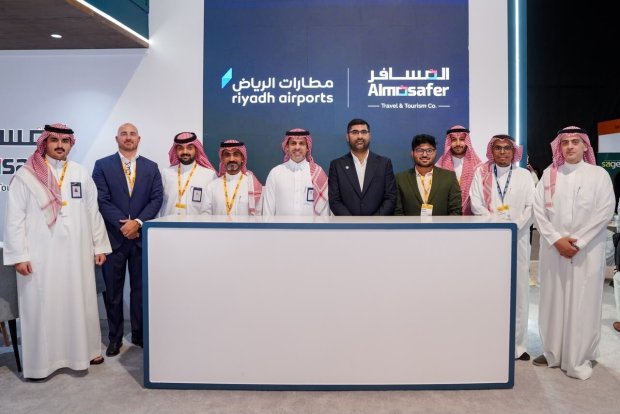
Riyadh Airports and Almosafer will explore how travel data, digital distribution and targeted campaigns can help grow demand for Riyadh routes.
Riyadh Airports Company (RAC) is looking to move route development closer to the point where travellers decide where and when to fly, as airports take a more active role in generating demand for the connectivity they are trying to build.
The operator of King Khalid International Airport has signed an MoU with travel company Almosafer to explore joint ecosystem and demand activation opportunities related to travel to and from Riyadh, providing a framework for this approach.
Traditionally, airports have focused on providing the infrastructure and connectivity needed to handle passengers, while airlines have taken primary responsibility for filling aircraft. But the passenger journey begins well before the terminal, with destination searches, flight comparisons and bookings shaping demand.
That creates an opportunity for airports to become more involved in the demand side of route development, using travel data and digital distribution to help support routes they want airlines to operate or expand.
Taking route development upstream
The RAC-Almosafer partnership brings together the airport’s understanding of routes, markets and passenger flows with Almosafer’s position within the travel booking ecosystem.
The two companies will explore initiatives designed to support travel demand growth, new commercial opportunities and partnership models across the passenger journey.
This could allow route development activity to extend into destination marketing and targeted demand generation, rather than ending once an airline has committed to a route.
For a new or developing service, campaigns could be built around specific markets and traveller groups, with demand measured against existing performance and adjusted according to the results.
The approach gives the airport a potential role in help strengthening demand and support route growth, rather than simply providing the infrastructure once a service has been established.
Helping airlines build demand
The strategy does not mean an airport taking on the role of an airline or travel agency. Instead, it positions the airport as a more active partner in the ecosystem required to make air connectivity work.
Airports can provide capacity and access, while airlines determine where aircraft are deployed. However neither alone determines the success of a route.
Bringing travel distribution and demand-generation capabilities into the route development process could therefore give airlines more support when entering or expanding in a market.
For Riyadh, that is increasingly relevant as the Saudi capital develops its international connectivity and seeks to attract more business and leisure traffic.
Supporting Riyadh’s ambitions
King Khalid International Airport connects Riyadh with a growing network of destinations across Saudi Arabia, the region and international markets.
The RAC-Almosafer agreement forms part of the wider development of Riyadh’s aviation ecosystem under Saudi Vision 2030, with the passenger journey becoming an increasingly important part of airport strategy.
The shift is ultimately about moving closer to the moment when travel demand is created. If airports can help influence destination choice and convert interest into bookings, route development can begin before a passenger ever reaches the terminal.
For Riyadh Airports, the partnership with Almosafer provides a practical way to explore what that model could look like.
Written by Nathan Baker, Aviation Business Middle East