



Beyond the Terminal: How Surface Access Strengthens BHX’s Route Proposition
 Credit: Birmingham Airport
Surface access strengthens BHX’s catchment, connectivity, and sustainable growth proposition for airlines.
For an airline assessing a new route, an airport’s catchment is only as valuable as its ability to reach it.
Birmingham Airport (BHX) sits at the heart of the UK’s transport network, with a catchment of over 13 million people within an hour, access to major road and rail corridors, and a growing network of sustainable public transport connections. Combined with access to more than 650 one-stop destinations through the airport’s airline network, this connectivity strengthens BHX’s position as a gateway not only for the West Midlands, but for passengers from across the wider UK.
For Steven Harrison, Senior Surface Access Officer, and Holly Tayler, Planning and Transport Coordinator at Birmingham Airport, the focus is therefore not simply on how passengers reach the terminal. Surface access is an important part of BHX’s wider proposition to airlines, helping make its catchment more accessible, strengthening the resilience of passenger flows, and supporting sustainable, long-term route development.
Turning catchment potential into passenger demand
A large catchment provides airlines with significant potential demand, but converting that potential into passengers requires reliable connections between communities and the airport.
“Birmingham Airport possesses a large catchment area that helps to sustain the number of destinations served,” explains Holly. “As such, sustainable, multimodal surface access is a necessity in providing reliable services across our catchment.”
That is particularly important because transport provision varies considerably across the UK. Some communities have excellent rail connectivity, while others are more dependent on road, bus, or coach services.
“Our aim is to ensure customers have the options they need to arrive at Birmingham Airport following a safe and comfortable journey,” Holly adds. “That means ensuring all modes of transport are catered for.”
Providing passengers with a choice of transport modes also helps BHX manage periods of particularly strong demand.
During peak travel periods, including the summer season, the airport encourages passengers to consider the full range of available options. By distributing journeys across rail, coach, bus, and road, BHX can help improve sustainable mode share, while supporting comfortable and reliable access to the terminal.
For airlines, that accessibility matters. A theoretical catchment on a map becomes significantly more commercially valuable when passengers can reach the airport conveniently and consistently throughout the year.
Expanding the addressable market for airlines
Surface connectivity can also influence how passengers perceive distance.
Travellers will naturally consider both the destinations available from an airport and the time required to reach it. Strong rail and road connections can effectively bring an airport closer by reducing overall journey times, expanding the number of people for whom BHX represents a practical departure point.
This becomes particularly important for long-haul travel.
“Customers are less likely to consider a distant airport for a long-haul flight if reaching it adds significantly to their overall journey time,” Holly explains. “A strong surface access portfolio places Birmingham Airport among the options for a much larger number of people.”
For an airline evaluating a new long-haul or network route, that has clear commercial implications. Better access can expand the realistic passenger pool available to support a service, while providing greater confidence that demand can be sustained beyond the airport’s immediate surroundings.
A connectivity advantage that exists today
HS2 represents a significant future opportunity for BHX, but the airport’s surface access proposition is not dependent on future infrastructure.
Today, passengers benefit from frequent rail services, connections into central Birmingham and London, links with more than 300 stations, growing integration with regional and national bus and coach networks, and direct access to the Midlands motorway network.
“Birmingham Airport already offers a meaningful and sustainable connectivity advantage for airlines planning routes in the near term,” says Steven.
Its location close to major population centres, combined with an established transport network, gives airlines access to a broad market today.
“Located at the heart of the UK’s transport network, BHX’s resilience across different modes, and its connections to key strategic locations regionally and nationally, create a credible advantage against larger, more constrained airports,” Steven adds.
While HS2 is expected to transform future access to Birmingham and London, existing infrastructure already provides competitive journey times, multimodal resilience, and strong passenger flows.
“For airlines making decisions now, BHX’s established surface access mix delivers a practical and immediate market advantage that supports sustainable route development.”
Multimodal connectivity by design
One of the distinguishing characteristics of BHX is the integration of different transport modes around the airport.
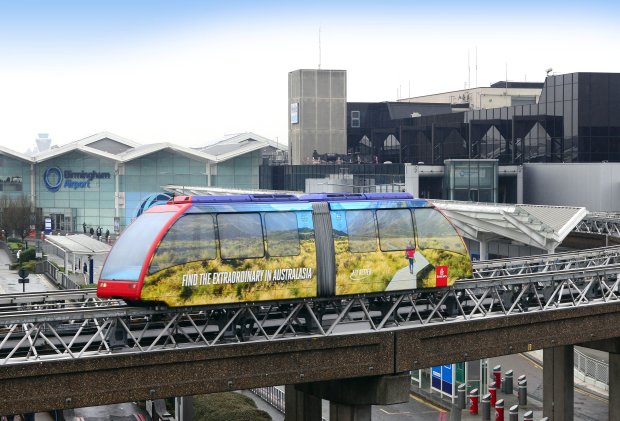
Birmingham Airport was the first UK airport to introduce a free Air-Rail Link between its passenger terminal and railway station, providing passengers with a direct connection to Birmingham International station within minutes.
From there, passengers can connect directly to destinations across the national rail network.
“Birmingham Airport’s surface access mix stands out because we deliver genuinely seamless, multimodal connectivity that few UK airports can match,” Steven says.
BHX’s position alongside strategic road networks further widens its reach, supporting private vehicle access, as well as extensive coach connectivity across the UK.
“For airlines assessing new bases or routes, this combination means access to larger passenger pools, more reliable feeder traffic, a resilient transport ecosystem, and more sustainable transport choices.”
Resilience is an important part of that proposition. A diverse transport network gives passengers alternatives when individual services or modes are disrupted, particularly during periods of adverse weather.
For Holly, this variety contributes directly to the airport’s ability to sustain year-round demand.
“If one service is impacted, passengers can utilise reliable and frequent services across a selection of other modes,” she explains. “That resilience helps maintain year-round use of the airport and ensures demand can continue to be satisfied.”
Connecting the region’s business economy
Surface access also has an important role in serving the West Midlands’ corporate travel market.
Business travellers frequently require flexibility, reliability, and the ability to make journeys at relatively short notice. A broad mix of frequent rail, bus, coach, taxi, and road options gives passengers greater choice when planning journeys around flight schedules.
“Frequent connections to Birmingham city centre, Solihull, and Coventry highlight the importance of regional connectivity to the business traveller,” Steven explains.
Rail connectivity also extends that proposition beyond the immediate region. Connections via Birmingham New Street provide access to important economic centres across England, Scotland, and Wales.
The quality of the onward journey is increasingly important too. Several train operators serving Birmingham Airport provide enhanced or premium accommodation, enabling passengers travelling in premium airline cabins to continue their journey with an elevated ground travel experience.
For airlines targeting higher-yield corporate traffic, this combination of frequency, flexibility, and national connectivity strengthens the overall journey proposition offered by BHX.
Growing through collaboration
Delivering an effective surface access strategy requires collaboration well beyond the airport boundary.
Birmingham Airport hosts a quarterly Airport Surface Access Group, bringing together stakeholders from across rail, road, bus, coach, and local government.
The forum enables the airport and its partners to share developments, discuss future surface access priorities, and identify solutions to common challenges.
“Sustainable surface access is only going to become more important,” says Holly. “Long-term ambitions can only be achieved through close and credible relationships with transport operators and our regional partners.”
This collaborative approach is particularly important as both passenger numbers and expectations around sustainable travel continue to develop.
Supporting responsible aviation growth
For airlines and airports, sustainability is increasingly considered across the entire passenger journey, rather than beginning and ending with the flight itself.
That places greater emphasis on how passengers travel to and from airports.
“In a world where airports and airlines increasingly look at passengers’ journeys from door to door, there is a greater focus on sustainable surface access to help achieve ESG goals, support responsible growth, and reach new catchment areas,” Steven explains.
Decarbonisation of bus and coach fleets, enhanced rail connectivity, and improvements to active travel infrastructure all have the potential to encourage a shift towards more sustainable transport.
BHX already benefits from significant integration between these modes. Rail services connect Birmingham International with more than 300 stations across England, Wales, and Scotland, while long-distance coaches provide connections towards destinations including London and the North West, and local buses connect the airport with communities across the region.
Surface transport also contributes to the wider Scope 3 emissions associated with aviation. Increasing the availability and attractiveness of sustainable alternatives can therefore support broader industry ambitions around Net Zero and Jet Zero.
For BHX, this means surface access is about considerably more than getting passengers to the terminal.
It is about making the airport’s catchment genuinely accessible, giving passengers greater choice, improving resilience, supporting the region’s economy, and providing airlines with confidence that new capacity can be supported by sustainable demand.
Future infrastructure will strengthen that proposition further. However, for airlines considering Birmingham today, the foundations are already firmly in place.