
Welcome introduction from Routes. Hear what you can expect over the course of the event.

Routes World 2026
Frankfurt, Germany
• 21 – 23 October 2026
Conference Programme
The Routes World conference programme will bring together senior leaders from the route development and aviation industries.
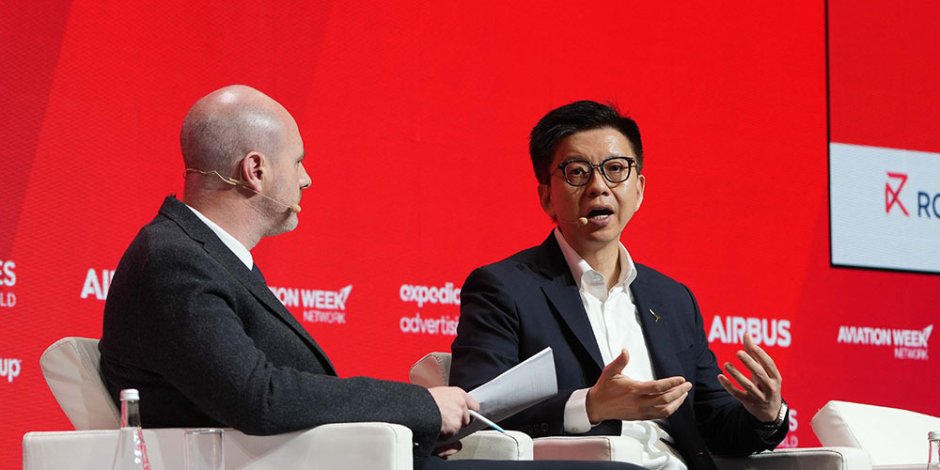
Comprising keynote interviews, panel discussions, airline briefings and best practice workshops, the Routes World 2025 conference programme will provide an exclusive platform for aviation leaders from around the globe to outline the latest market insights and provide expert advice that will inform business strategy.
Platinum Conference Sponsor
 Airbus is on a mission to connect today and tomorrow. Airbus offers the latest-generation aircraft and services to meet the needs of any airline – from low-cost and full-service carriers to the air freight and VIP transport segments – while leading commercial aviation’s transition to the new era of decarbonisation. Find out more
Gold Conference Sponsors
 With headquarters in São José dos Campos, Brazil, and offices in the U.S., France, Australia and now China, Embraer is the fourth largest manufacturer of commercial aircraft in the world, employing more than 9,000 people worldwide. Find out more
 Gia Binh International Airport – the centerpiece of Vietnam’s next-generation 2.0 aviation economic hub, poised to become a powerful driver of national growth and a global destination icon. The Airport is positioned as a strategic infrastructure project, delivering five-star service quality, enhancing customer experience, and setting a new benchmark for Vietnam’s aviation industry. Find out more
 Lufthansa Systems is a global leader in IT solutions for the airline industry. With deep aviation expertise, cutting-edge technology, and decades of project experience, we deliver innovative solutions that drive efficiency, safety, and competitiveness. Find out more
Showcase your organisation’s innovative approach and adaptability
As a trusted source of information across the route development community, Routes 360 members are sharing their latest initiatives, innovations and efforts to position themselves as a credible leader that can adapt to industry trends and challenges.
Wednesday, 21 October 2026
-
-
-
-
In the Spotlight:
Fraport's Vision for the Next Era of Aviation
Alexander Laukenmann, Senior Executive Vice President for Aviation, Fraport AG
-
-
CEO Keynote Interview
-
-
-
Securing Routes: How to Build Strong Partnerships Between Airlines, Airports, and Destinations
Securing new routes has never been more competitive on a global scale. As airlines adopt a disciplined approach to capacity deployment, airports and destinations worldwide must present compelling, data-driven cases to attract investment and secure new routes.
This session will explore how stronger collaboration between airlines, airports, and tourism bodies is shaping successful route development strategies across diverse regions. From joint marketing agreements and risk-sharing models to long-term demand stimulation and performance tracking, panellists will examine what truly makes partnerships sustainable in an increasingly interconnected and competitive global aviation market.
-
-
Lunch Break
-
-
Keynote Address: Airbus
Grainne Van den Berg, Head of Commercial Aircraft Sales, Vice President Middle East, Airbus
-
-
CEO Keynote Interview
A member of the founding team that launched Emirates in 1985 and the airline’s President since 2003, Sir Tim has overseen its transformation into one of the world’s largest and most influential international carriers.
Under his leadership, Emirates has pioneered innovative network strategies, helped establish Dubai as a leading global aviation hub and built one of the industry's most recognised premium brands. In 2025-26, the airline reported record revenues of $35.7 billion and remained the world’s most profitable airline, despite operating against a backdrop of geopolitical uncertainty and regional conflict.
Drawing on more than five decades of industry experience, Sir Tim will share his perspectives on the forces shaping global aviation, including the outlook for long-haul travel demand, fleet and supply chain challenges, aircraft delivery delays, premium market trends and the evolving geopolitical landscape.
-
-
Fireside Chat: What’s Next for British Airways?
British Airways (BA) enjoyed a record financial and operational performance in 2025 and is planning a significant long-haul expansion planned for the winter 2026-27 season. The airline is adding new destinations including Melbourne and Colombo, increasing frequencies across key leisure and business markets, and investing in customer experience, digital connectivity and fleet renewal as part of its wider transformation programme.
In this fireside chat, Chief Planning and Strategy Officer Neil Chernoff will discuss how the airline is shaping its network for the next phase of growth. The conversation will explore BA’s approach to long-haul expansion, the role of Heathrow and Gatwick within its strategy, how the carrier is responding to shifting demand patterns and geopolitical disruption, and where future opportunities lie across premium, leisure and connecting markets.
The session will also examine how BA is balancing growth with operational resilience, sustainability commitments, aircraft availability and changing customer expectations as it works to build a more modern, reliable and competitive airline.
-
-
Networking Break
-
-
Navigating Turbulence: Middle East Airlines, Airports, and Tourism Strategies for Recovery
The Middle East remains one of the world’s most important aviation crossroads, but the geopolitical crisis in the region means airlines and airports are facing a far more difficult operating landscape. IATA expects Middle East airlines to move from a $7.2 billion profit in 2025 to a $4.3 billion loss in 2026, with demand forecast to fall 11.4% and capacity down 4.4% as airspace disruption, weaker transfer flows, elevated fuel costs and shifting demand patterns test the resilience of the region’s aviation and tourism sectors.
This panel will examine how Middle East airlines, airports and tourism authorities are responding to near-term disruption while protecting the long-term strengths that have underpinned the region’s growth: geographic advantage, world-class infrastructure, strong hub connectivity and deep airline-tourism partnerships. Panellists will discuss how networks are being adapted, how destinations are working to rebuild confidence, and how airports and carriers can maintain connectivity amid operational uncertainty.
The discussion will also explore whether the region’s hub-based model is being reshaped by current pressures, where new opportunities are emerging, and what strategies will be needed to support a more resilient and sustainable aviation and tourism ecosystem.
Thursday, 22 October 2026
-
-
Keynote Interview
Lufthansa Group
Join us for an exclusive keynote interview with Dieter Vranckx, Chief Commercial Officer of the Lufthansa Group and member of the Executive Board of Deutsche Lufthansa AG. With a distinguished career spanning over two decades in the aviation industry, Dieter brings unparalleled expertise in commercial strategy, customer experience, digital transformation, and global operations.
From his early days at Swissair to leading SWISS and Brussels Airlines as CEO, Dieter has been at the forefront of shaping the future of air travel. His leadership in integrating ITA Airways and driving innovation across the Lufthansa Group’s brand portfolio highlights his visionary approach to the industry.
In this engaging session, Dieter will share insights into his journey, the challenges and opportunities in the aviation sector, and his vision for enhancing the customer journey in a rapidly evolving landscape. Don’t miss this opportunity to hear from one of the industry’s most influential leaders.
-
-
Powerhouse Panel: State of the Industry
Air transport in 2026 faces resilient demand, but the industry’s operating environment has become far more complex. Passenger traffic continues to grow and load factors are expected to reach record levels, yet profitability is forecast to halve as Middle East disruption, sharply higher fuel prices, supply chain constraints and weaker macroeconomic conditions place renewed pressure on airline margins.
This panel will examine how aviation leaders are planning for growth in a higher-cost, more volatile environment. Panellists will discuss how airlines, airports and destinations are adapting networks amid aircraft delivery delays, airspace restrictions, infrastructure bottlenecks, rising regulatory costs and shifting passenger behaviour. The discussion will also explore where demand remains robust, where capacity is being constrained, and how the industry can maintain connectivity, profitability and sustainability in the years ahead.
-
-
Networking Break
-
-
CEO Keynote Interview: Wizz Air
József is one of Europe’s most influential airline leaders, having founded Wizz Air in 2003 and overseen its growth into one of the continent’s largest LCCs. Today, the airline serves nearly 70 million passengers annually, operates a fleet of more than 260 aircraft and maintains one of the youngest and most fuel-efficient fleets in the industry.
As Wizz Air enters a new phase of development, József is leading the airline through a period of strategic transformation. Recent priorities have included accelerating growth in core Central and Eastern European markets, managing the impact of aircraft groundings linked to Pratt & Whitney engine inspections and refining long-term fleet plans.
In this session, József will share his views on the outlook for European aviation, fleet and network strategy, and how Wizz Air is balancing growth, resilience and profitability amid geopolitical uncertainty.
-
-
Lunch Break
-
-
New Aircraft, New Networks: How Technology Is Reshaping Airline Business Models
The airline industry in 2026 is navigating a more intricate operating environment, reshaping business models across the sector. While demand remains robust, challenges such as rising fuel prices, aircraft delivery delays, supply chain disruptions, and margin pressures are compelling airlines to rethink their strategies for capacity deployment, route expansion, and meeting evolving customer expectations.
This panel will delve into how advancements in new-generation aircraft, digital tools, and innovative network strategies are redefining the competitive dynamics for both low-cost carriers (LCCs) and full-service airlines. Long-range narrowbody aircraft, such as the Airbus A321XLR, are unlocking opportunities to serve thinner long-haul markets, experiment with new point-to-point routes, and optimise aircraft utilisation. At the same time, fleet limitations are driving airlines to adopt a more selective and strategic approach to growth. Similarly, next-generation small narrowbodies like the Embraer E195-E2 are enabling carriers to profitably launch new routes and increase frequencies by aligning capacity more precisely with demand. These aircraft, which combine the industry's lowest trip costs with seat costs comparable to larger narrowbodies, provide airlines with the flexibility to expand networks while mitigating commercial risks.
The discussion will also explore how technology is transforming key areas such as route development, revenue management, customer segmentation, and operational efficiency. Additionally, the session will examine whether the traditional distinctions between LCCs, hybrid carriers, and full-service airlines are blurring as carriers adapt their business models to address higher costs, limited capacity, and emerging market opportunities. Panellists will provide insights into how these shifts are shaping the future of the airline industry and influencing competitive strategies.
-
-
What Role Will AI Play in the Future of Route Development?
Artificial intelligence is moving quickly from concept to practical application across aviation, with growing implications for how airlines, airports and destinations analyse markets, forecast demand and make network decisions.
This session will explore how AI-driven tools, predictive analytics and richer data sources are changing route development and network planning. Panellists will discuss where AI can improve decision-making, from identifying unserved demand and testing route opportunities to supporting revenue, operations and destination marketing strategies.
The discussion will also examine the limits and risks of AI adoption, including data quality, transparency, integration with existing systems and the changing skills required across commercial aviation teams. Rather than replacing industry expertise, the session will consider how AI can support better, faster and more informed decisions in an increasingly complex market.
-
-
Networking Break
-
-
Inside the Network Planner’s Mind
Ever wondered why your airport lost a route? Why that “obvious” long-haul never launched? Or what really goes into choosing one city over another?
This fast-paced, audience-led session puts four airline network planners in the hot seat. No slides, no scripts—just honest answers and real-world insight. From fleet constraints and politics to profitability, partnerships and pure gut instinct, nothing is off limits.
Bring your toughest questions and join an open, interactive conversation that lifts the lid on how routes are really decided.
Friday, 23 October 2026
-
-
The Cost of Seasonality
Building Year-Round Route Networks
The aviation industry faces a significant challenge with seasonality, which comes at a high cost. Leisure routes dominate the summer schedule but often vanish in winter, leaving aircraft, crews, and valuable slots underutilised for months. While summer capacity is stretched thin, winter capacity remains underused, and the relentless addition of new aircraft only exacerbates the peak-season congestion.
In this opening keynote, Ged Brown, founder of Low Season Traveller and the Tourism Seasonality Summit, highlights the untapped potential of the winter season as the industry's most underutilised asset. Using the latest data on demand trends, capacity, and the impact of a changing climate, he makes the case for why network planners, airports, and destinations must shift their focus from concentrating growth into a few peak months. Instead, he explores how route development can unlock year-round connectivity, ensuring a more balanced and sustainable approach to aviation. This keynote sets the stage for the panel discussion that follows.
-
-
Balancing Seasonality
The Year-Round Connectivity Challenge
This panel brings together key stakeholders from across the aviation ecosystem—an airline, an airport, a destination, and an aviation data expert—to tackle a critical question: how can a route operate successfully year-round rather than just during the peak five months?
The discussion delves into the factors that make marginal winter routes viable, examining who bears the risk during the early seasons and how that risk is shared. It also explores whether current airport incentives and fee structures genuinely support year-round services or if they disproportionately favour new summer routes. Finally, the panel considers the most effective strategies for driving demand during the shoulder months.
The goal of this session is to develop a collaborative playbook for spreading connectivity—and its economic benefits—across the entire calendar, creating a more balanced and resilient aviation industry.
-
-
Networking Break
-
Exclusive updates direct from key airline decision makers and network planners.
-
Exclusive updates direct from key airline decision makers and network planners.
-
Exclusive updates direct from key airline decision makers and network planners.
* Please note like all events, the programme is subject to change.
Speakers
-
 Sir Tim Clark
President, Emirates Airline -
 Mammen Tharakan
Director General, TIACA -
 Mr. Kaweh Mansoori
Minister of Economic Affairs, Energy, Transport and Rural Areas and Deputy Minister-President of Hesse -
Hasan Hamdan
Aviation Marketing, Sabiha Gökçen International Airport -
 Alisha Reynolds
President & CEO, Tourism Calgary -
Diogo Bertussi
Network Planning Manager, GOL Linhas Aéreas Inteligentes