



Athens International Airport Achieves Net Zero 25 Years Ahead of Industry Targets
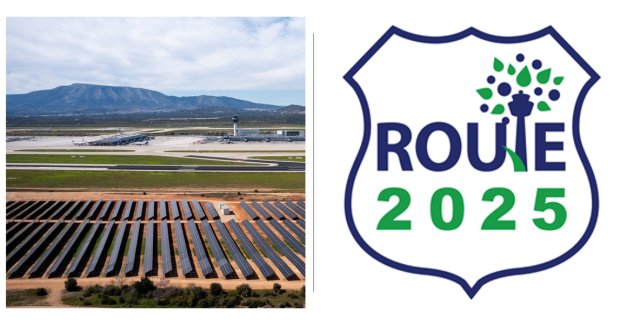
From the very first day of 2026, all of the airport company’s electricity needs will be covered solely by clean, renewable electric energy produced within the airport’s facilities for self-consumption, making Athens International Airport the only airport in Europe that covers 100% of its needs exclusively with clean energy produced within its facilities.
In December 2019, Athens International Airport made the bold decision to launch a highly ambitious project under the name “ROUTE 2025”, aiming to achieve, by 2025 — well ahead of the 2050 target set by European airports and by the aviation industry — a net zero greenhouse-gas emissions balance, through self-production, storage and self-consumption of clean and renewable electric energy generated within the airport.
Six years later, the Airport Company completes, within the set timeframe, the “Roadmap” of “ROUTE 2025” and delivers into full operation the second — and largest in Greece — self-generation photovoltaic plant at an airport, with a capacity of 35.5 MWp, together with an 82 MWh energy storage unit. The total installed capacity of the airport’s self-generation photovoltaic plants now amounts to 51.5 MWp (16 MWp + 35.5 MWp). At the same time, the battery-based energy storage unit, with a usable capacity of 82 MWh, constitutes a key element of the architecture of the unified system, with a clear environmental purpose — the maximization the consumption of the generated energy for the company’s own needs, ensuring optimal autonomy.
“ROUTE 2025” is not a standalone project but a network of inter-complementary projects and interventions that operate as a single energy ecosystem, one of the most integrated among European airports. The investment amounted to €70 million, with a significant part of the investments having been financed in the form of loans by the European Union’s Recovery and Resilience Facility.
The key characteristic of the programme is real decarbonisation, as well as maximum additionality.
Specifically, the “ROUTE 2025” programme encompasses the Airport Company’s emissions that fall within its direct control, namely:
– the direct emissions (Scope 1) from the consumption of fuels by the corporate fleet, boilers and other equipment
– the indirect emissions (Scope 2) arising from the purchase of electricity consumed by the buildings and other facilities of AIA
and has been designed so as to cover the needs that will arise from the airport’s future expansion plan up to 2046 (the end of the concession period), Despite the significant increase in passenger traffic, AIA has already achieved, from 2005 to 2024, a reduction of its footprint by more than 55% in total — from 67,001 tonnes of CO₂ to 29,209 tonnes of CO₂ — through a series of interventions in the airport’s operations and infrastructure.
|
Annual production of 88,000 megawatt-hours – roughly equivalent to the consumption of 22,000 households.
By the end of the concession period (2046), the operation of the entirety of the PV plants will prevent CO₂ emissions equivalent to the planting of a forest 1.5 times larger than the area of the airport.
|
In addition, on top of the positive environmental footprint, the overall investment will also have a positive economic footprint (positive business case), while at the same time contributing to the sustainability of the local communities and, of course, to the elevation of the City of Athens’ status as a leading sustainable destination.